 Rank Forge Marketing
Mobile Bartender Marketing: How to Book More Events
The short answer
Mobile bartender marketing works when local visibility, visual proof, and a fast quote process operate as one system. Help event hosts find your specific service, show that you can handle their venue and guest count, make requesting a quote effortless, and confirm availability before the date is booked elsewhere. Instagram builds interest; a strong website and Google presence turn that interest into signed events.
Market the experience the host is picturing
Most hosts are not searching for a bartending certification. They are picturing a polished bar setup at a wedding reception, a smooth happy hour for a corporate office, a themed cocktail menu for a milestone birthday, or reliable service that lets them enjoy their own event instead of managing a cooler and a folding table.
Separate the offers that involve different buyer questions: wedding bar packages, corporate and office events, private parties, and seasonal or holiday bookings. Explain typical guest counts, staffing included, setup requirements, licensing or permit handling, and what makes each package different.
A clear event-type message improves both search relevance and the first quote conversation. It also helps hosts quickly understand whether your service fits their venue, budget, and guest count before they reach out.
Own your local presence on Google
A mobile bartending business travels to the venue, so Google typically treats it as a service-area business when there is no public storefront customers visit. Use one accurate Google Business Profile, hide a home or storage address that hosts do not visit, and list only the cities or regions you can reliably staff and travel to.
Complete the profile with the correct primary category, event services offered, a working phone number, current photos, and recent reviews. Do not create separate profiles for every city on your travel radius—Google requires genuine eligible locations, and a suspended profile can remove a significant source of inquiries during peak wedding and holiday season.
Our guide to service-area business local SEO explains profile eligibility and territory planning in more depth. The goal is strong visibility across the region you can staff well, not the widest possible travel radius.
Build event-type pages for high-intent searches
A single homepage labeled "mobile bar service" asks Google and the host to infer too much. Create a dedicated page for each event type that matters to your business. A wedding page can address timeline coordination, signature cocktails, staffing ratios, and coordinator communication. A corporate event page should cover invoicing, professional presentation, and working within office or venue policies.
Each page should include the event type, ideal guest count, package inclusions, staffing details, licensing and insurance information when accurate, pricing structure, real setup photos, service area, FAQs, and a direct quote action. Link related event types together so a host planning a rehearsal dinner can easily discover your wedding-day package too.
Clean small-business web design keeps this information easy to review on a phone, since many hosts research vendors from their phone while comparing options during a single evening.
Make requesting a quote fast and specific
Event dates get booked quickly, and a host is often contacting several bartending services at once. If one business requires an email with no clear next step and yours offers a simple quote form with a fast, specific response, that difference decides who gets booked.
Ask for name, phone or email, event date, event type, guest count, venue or address, desired bar style or package, and any licensing requirements the venue has. Confirm date availability immediately when possible, since a host will keep searching if they are unsure whether your date is open.
Set a response-time expectation and meet it. An automatic confirmation explaining next steps and typical turnaround for a formal quote reduces uncertainty. Strong conversion optimization covers the full process after the form, not only the request button.
Show proof that matches the event
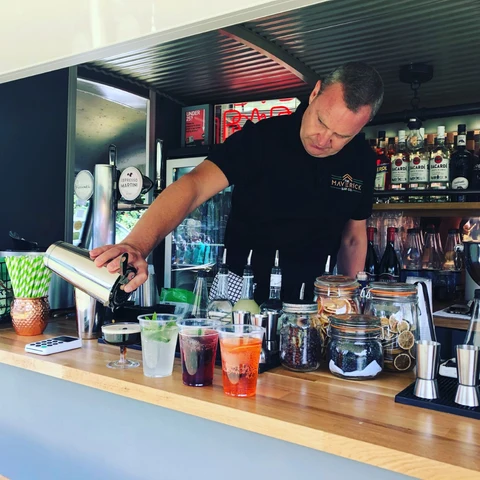
Mobile bartending has a natural marketing advantage: the setup and presentation are highly visual. Use it deliberately. Photograph full bar setups, signature drink presentations, staff in uniform, and the overall event atmosphere—not only a single close-up cocktail shot.
Organize galleries by event type so a bride researching wedding bars sees wedding setups, and an office planner sees corporate happy hour setups. Include short video clips of the bar in action when possible; motion communicates energy and professionalism more effectively than photos alone.
Turn standout events into short case studies covering guest count, venue type, package selected, and how the event went. This helps an undecided host picture their own event clearly.
Build a referral and review loop with planners and venues
One well-run event can produce several more bookings. Ask for a Google review shortly after the event while the experience is fresh. Make the request personal and easy, but never offer incentives for reviews or request them selectively from only the easiest hosts.
Build relationships with wedding planners, venue coordinators, and corporate event planners who repeatedly refer vendors. A simple referral arrangement or a coordinator-facing one-pager with packages and pricing ranges can turn one relationship into a steady stream of bookings.
A consistent review process strengthens trust on Google and your website. Feature reviews next to the event type they describe rather than grouping every testimonial on one generic page.
Use social media as your visual portfolio
Instagram and Pinterest are especially effective for mobile bartending since hosts are actively browsing for aesthetic inspiration. Post full setup photos, signature drink recipes tied to real events, behind-the-scenes prep, and short highlight reels from recent bookings.
Every profile should link to a fast quote page you control. Social platforms are excellent for discovery and inspiration, but the website and Google Business Profile should hold your durable package details, licensing information, proof, and inquiry path.
A focused social media strategy repurposes real event photography while your website and Google presence capture demand from hosts already searching for bar service.
Add paid ads once your quote process is reliable
Paid search and social ads can put your packages in front of hosts actively planning an event, but they also expose a slow quote process. Build a focused landing page for the advertised event type and area, match the ad message to the page, and track actual booked events—not just clicks or form submissions.
Protect the budget with seasonal timing (engagement season, holiday party season), geographic targeting, and separate campaigns for wedding versus corporate offers, since these buyers respond to different messaging and timelines.
Start with a small, controlled paid advertising test only after quotes are answered quickly, availability is confirmed accurately, and booked events can be traced back to the campaign.
Track bookings by event type, season, and source
The useful question is not "did my Instagram followers grow?" It is "which marketing source produced booked, profitable events?" Record the source, landing page, event type, quote date, event date, package value, and whether the booking closed. Review the numbers monthly, especially around wedding and holiday seasons.
Patterns guide the next decision. A page with traffic but few quote requests may need clearer pricing signals or stronger photos. Many inquiries for events outside your capacity may mean tightening your event-type messaging. Strong demand for one package with thin content elsewhere shows where to invest next.
This visibility-to-booking approach also applies to other event-adjacent businesses. See how a bounce house rental business can convert more party searches and how a personal trainer can build a steady consultation pipeline.
A 30-day mobile bartender marketing plan
- Week 1: define your core event types, ideal guest count range, service area, and quote response standard.
- Week 2: complete your Google Business Profile and build out your top event-type pages.
- Week 3: organize proof by event type, add event-specific reviews, and launch a short quote request form.
- Week 4: request reviews from recent hosts, publish one event highlight story, and test the full quote-to-booking follow-up.
Repeat what produces booked, profitable events. Do not add another channel simply because it is popular if current inquiries are still being answered slowly or tracked poorly.
Research basis
This guide reflects recurring searches about getting mobile bartending clients and Google's current guidance for service-area businesses, accurate business representation, and the role a verified profile plays in helping customers find and contact local businesses.
Want more inquiries from hosts ready to book your bar service?
We can strengthen your local visibility, event-type pages, paid search, and quote process around the events you want more of.
Explore Local SEOFrequently Asked Questions
How does a mobile bartending business get more bookings?
Build a complete Google Business Profile, create clear pages for each event type and package, show real setup photos and video, earn detailed reviews, offer a fast quote request, and follow up quickly with availability. Add paid ads only once the inquiry and booking process is reliable.
What should a mobile bartender website include?
Include clear event types served (weddings, corporate events, private parties), package options, staffing and setup details, licensing or insurance information when accurate, the service area, a simple quote request form, photos of past setups, and useful FAQs.
Does local SEO work for mobile bartending services?
Yes. Mobile bartending is typically a local, service-area business. An accurate Google Business Profile, event-type pages, local reviews, and consistent business details help hosts searching for bar service find and trust a provider in their area.
Should a mobile bartender create a page for every event type?
Yes when the event types involve different buyer questions. Weddings, corporate happy hours, birthday parties, and holiday events each have different guest counts, timelines, package needs, and decision-makers.
What should a mobile bartender quote request form ask?
Ask for name, phone or email, event date, event type, guest count, venue or address, desired bar style or package, and any licensing requirements the venue has. Keep it short and confirm availability quickly since event dates get booked fast.
Should mobile bartenders post pricing online?
Showing starting package prices or per-guest ranges helps hosts self-qualify and reduces quote requests that are outside budget. Avoid a single fixed price when guest count, hours, staffing, and add-ons materially change the total.
 Rank Forge Marketing